Older-Unit Care · Seasonal houses
Closing Up a Seasonal House: Shutting a Sub-Zero Down Properly
A second home on the island shut for the winter leaves its Sub-Zero either running with nobody watching or off with the damp shut inside.
- Written by
- Bjorn Aaltonen
- Trade
- Refrigeration technician, 15 yrs
- Holds
- EPA 608 certified
- Dated
Running and empty, or off and open
An empty house on the island has two ways to keep its refrigerator, and both carry a risk. Left running, the unit is fine until the first winter storm takes the power out; if nobody is there, the cabinet warms, anything left inside spoils, and it stays that way until someone happens to come by. Switched off with the doors closed, nothing can spoil, but the air inside is shut in with the moisture it held on the day the doors closed.
For an absence measured in months, Sub-Zero’s use and care guides settle it: power off, empty, doors blocked open. Running is what they describe for a short trip.
Why the doors must not be shut
The cabinet of a refrigerator is built to keep air in. That is exactly what you do not want once the cold has gone. Damp air trapped in a dark box that stays close to room temperature is the condition mould likes, and the gasket folds, the shelf supports and the drain pan are where it starts.
The guides for the older 500 and 600 series go further than a smell. Their caution is that moisture built up during even the shortest amount of running time could attack the metal, which is why a switched-off unit is meant to stand open.
If the house is let out for the summer
Many second homes on the island are used or rented for part of the year and closed for the rest. The 500 and 600 series guides cover that pattern too: a unit put into service for a while and later shut off should have its power off and its doors blocked open, just as for a long absence. Treat every closing of the house as a full shutdown, even when the next opening is only a few weeks away.
The procedure, step by step
- You will want
- Flashlight · Soft cloths · Door wedges or rolled towels that will not slide
- And to hand
- Mild dish soap · Baking soda · Bags for whatever comes out
-
Decide which kind of absence this is
The manufacturer's guides treat a short trip and a long one differently. Gone for a short spell: the unit keeps running, the perishables come out, the ice maker goes off, the ice is tipped out and the temperature settings stay as they are. Gone for the season: carry on with the rest of this procedure, which ends with the unit off and its doors open.
-
Empty every shelf, drawer and door bin
Take all of it out, jars and bottles in the door included. Anything left in a cabinet that is about to be switched off becomes the smell that meets you in spring. Lift out the shelves and drawers that come out easily; they wash better at the sink than inside the unit.
-
Switch the ice maker off and tip out the ice
Use the ice maker key or switch on the control panel, then empty the stored ice into the sink. The older 500-series guide gives the reason: ice left sitting in the container for a long time shrinks and sticks together into a lump.
-
Turn the unit off at its own control
On a current Classic built-in, touch POWER until OFF shows in the display. A 600-series built-in has a UNIT ON/OFF key pad that cuts power to the whole unit. The older 500-series guide says to turn the controls off or shut off the circuit breaker that feeds the refrigerator.
-
Wash the inside gently
Wipe the walls, shelves and drawers with a mild mix of soap and lukewarm water with a little baking soda in it, then rinse. Keep water away from the lights and the controls. The guides say no vinegar, and the Classic guide also rules out rubbing alcohol and other alcohol-based cleaners on any interior surface.
-
Dry every surface, gasket folds included
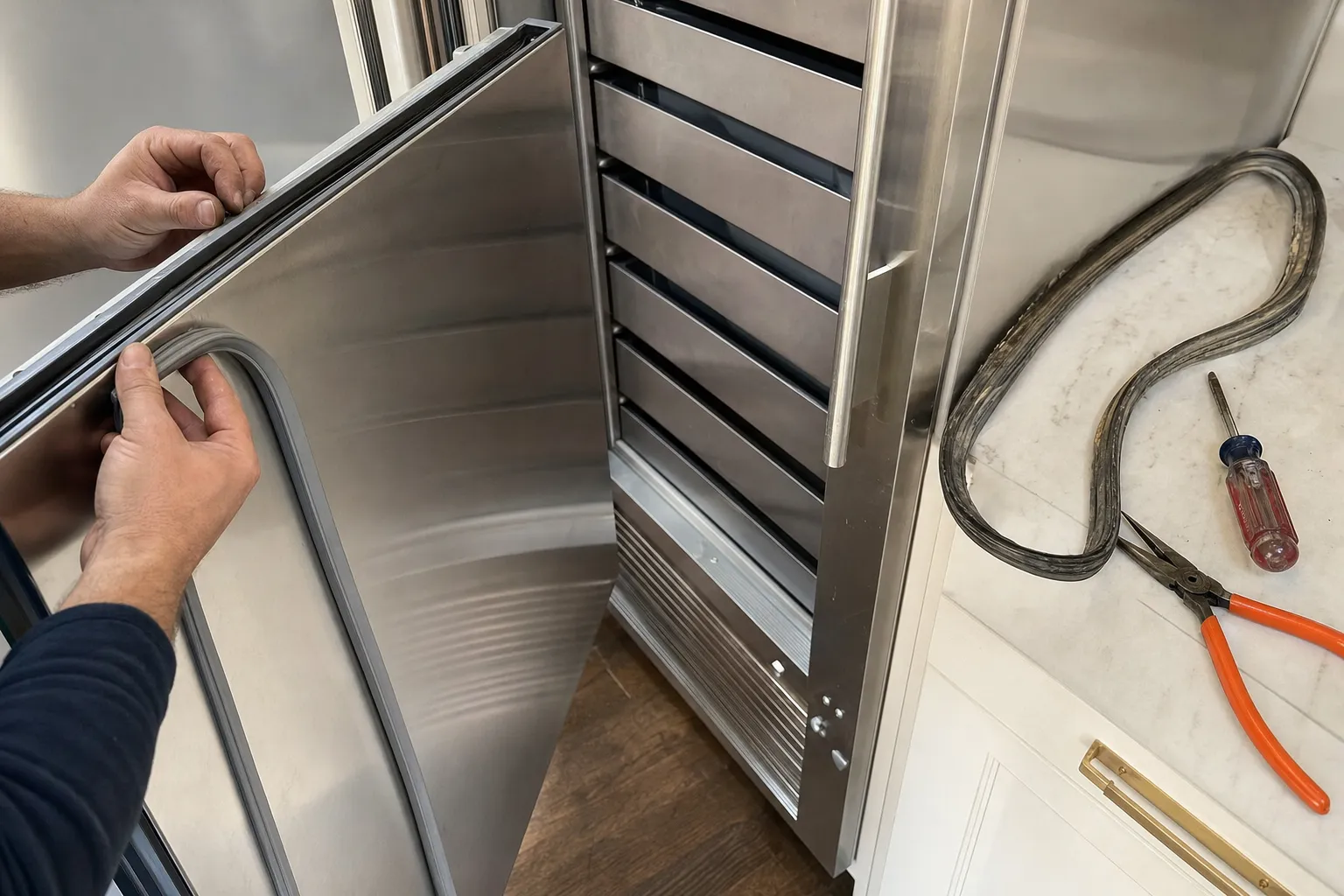
Towel everything dry, then run a dry cloth along each door gasket while you hold its folds open with a finger. A fold closes over whatever water is left inside it, and that water will have the whole winter to sit there.
-
Block each door open about an inch
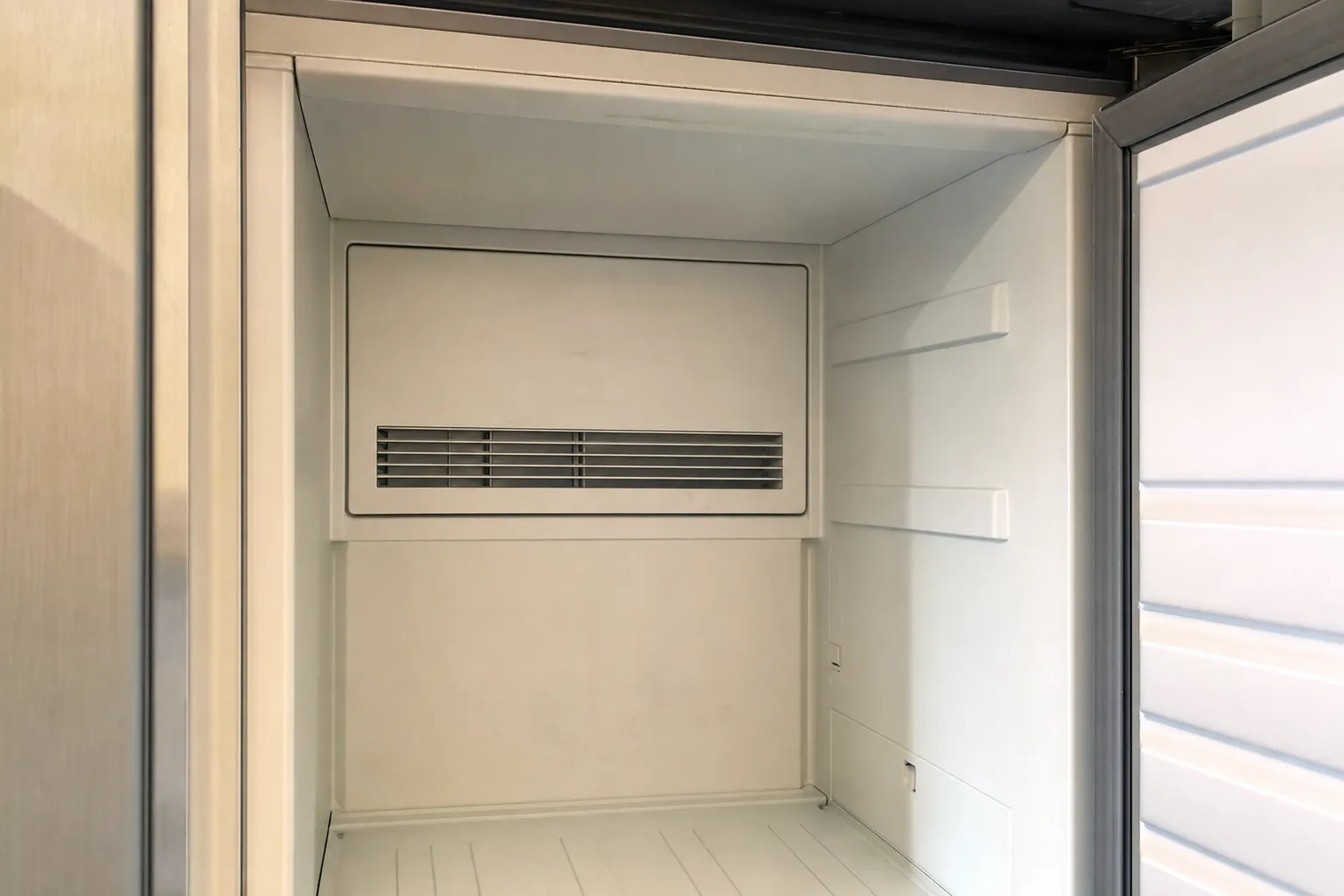
The 600-series guide asks for a gap of about 1 inch (25 mm) so fresh air can keep the interior dry, and the older 500-series guide asks for about the same. Use a wedge or a firmly rolled towel that will not drop out if someone brushes past the door.
-
Leave a note for whoever opens the house
On a Classic, the guide wants a new water filter fitted before the unit is started again. Write that on a card, with the date the unit went off, and tape it inside the fridge door where the first person back will read it.
That is where an owner stops. Past this point the work means panels off, live wiring or the sealed system, and it is ours: Driftwood Appliance Service, (206) 785-2960.